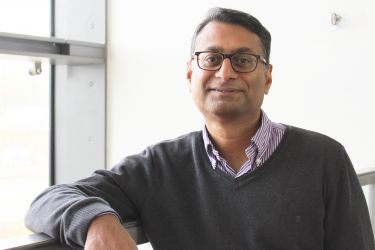
In this interview, we sit down with Programme Director, Raj Rajarajan to explore the MSc in Financial Technology and Systems.
Academic interests and expertise
Can you tell us about your academic and research background?
I am a Professor of Security Engineering with a strong background in technology. I have both industry, academia and entrepreneurial experience. I have been working in the area of cyber security for well over 25 years now and have done research and commercialisation projects for many small, medium and large enterprises to translate research to technology products.
During the last 5 years I have developed an interest into Fintech due to the increasing penetration by the challenger banks to provide faster, affordable and easy access to financial services. Trying to address the challenges of the unbanked population of the society has been my motto for a number of years to meet the UN goals and fintech is one of those enablers which can narrow the social and financial divide through digital transformation and disruptive innovation.
What inspired you to specialise in your current field of study?
There is an increasing challenge to protect our digital infrastructures and digital economy. In addition there is also a societal need to address the online harm and safeguarding challenges especially the vulnerable and the minors. To address the increasing challenges in the online space its important to develop technological solutions which can help to build the guard rails around these future internet infrastructure.
What do you enjoy most about teaching and mentoring students?
I am very passionate about showing the students how the theory works in practice. Over the years I have always provided industrial examples so that the students can relate what they are taught in the classroom. I have mentored, over my 25 year academic career, many students who have gone on to very successful careers in major financial institutions, government agencies and in regulatory bodies. Seeing the growth and transformation of my students from fresh graduates to board members in large corporate organisations makes my job worth it everyday.
Why this course?
What makes this postgraduate programme unique within its field?
This is the only postgraduate programme where students get to work in an industrial project to co-create a product or process in the fintech industry. They are closely mentored by an industry and an academic mentors and they get to pitch their findings/products to senior decision makers in the investment world, banks and insurance companies. Students also get to listen to fintech professionals on a weekly basis and develop their own network in this area with some market leaders like Lloyds Banking Group.
What support is offered to help students transition from undergraduate to postgraduate study?
There is a very good support scheme in place to support the undergraduate students in the transition phase. In addition, there are bi-weekly meetings with the programme director to discuss any challenges encountered so that mitigation action plans can be developed well in advance. The students also have access to the alumni from the programme who are always happy to support the next generation graduates from the fintech programme.
Are there opportunities for networking with alumni or industry professionals during the course?
Yes absolutely. This is one of the unique features of the programme. The students get to meet at least one fintech industry leader each week during the term time. These networks have shown to be very valuable to many students and have led to jobs in Lloyds Banking Group, Mastercard and others.
Career paths
How does the programme help students develop skills for their future careers, whether in academia or industry?
Students are taught by academics with industry experience and industry professionals. This gives a unique blend of academic rigour and industry practical experience. As all students work with industry from day 1 of the programme it gives a greater opportunity for students to explore future career skills by discussing with the industry professionals. They also get to attend networking events where they have the opportunity to further build their professional network.
What career paths have graduates from this programme typically followed?
Students tend to go into the fintech industry as business analysts, big data analysts programmers and project/product managers.
Tips for offer holders
If you could highlight one thing that students should look forward to in this programme, what would it be?
Guaranteed industry led project integrated as part of the programme.
What advice would you offer to offer holders as they prepare to join this course?
There is plenty of opportunity to build a great network with the fintech industry professionals. So be prepared to work hard to develop something unique by applying automation and AI in the financial services sector. It's all about dedication, hard work and perseverance.