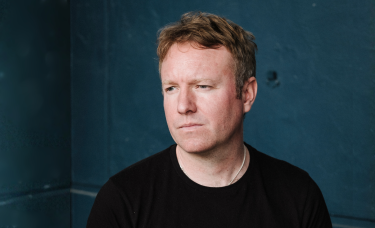
In this interview, we sit down with Joe Thomas, Senior Lecturer Director of our MA and MFA in Creative Writing.
Academic interests and expertise
Can you tell us about your academic and research background?
I write novels on urban conflict. My most recent research project is a trilogy of novels about police corruption, institutional racism, the devastating effects of Thatcherism, and the counter-cultural movement of the late ‘70’s and ‘80’s – The United Kingdom Trilogy, White Riot, Red Menace, and True Blue. The novels reveal the divisive roots of gentrification and the often violent racial and class tensions of the period that reflected wider changes within London and the UK.
My practice involves experimentation with narrative forms to create a fictional world that mirrors the experience of contemporary life from a variety of social backgrounds in a thriving and economically and culturally rich urban setting. My research involves the study of historical/factual events, specifically in urban settings, and fashioning compelling fictional narratives from this source material while using traditionally non-fiction referencing systems and techniques. My practice asserts that crime fiction is a significant literary mode in its ability to examine specific points in time in specific places, i.e., it can be the most overtly political literary form.
My international profile has been developed by publishing deals in Italy, France, Germany, and Spain.
I am the recipient of a K Blundell Trust award for work that aims to increase social awareness and ‘contribute to the greater understanding of existing social and economic organisations.’
How do you see your field evolving over the next decade?
It’s very hard to predict what fiction will look like next year, let alone the next decade! That said, the boom in genre fiction looks likely to continue – fantasy, romantasy, cosy crime, the psychological thriller – and I believe that second-world dystopian and utopian fiction will be a significant trend. (I don’t like the word trend.) The main thing is, I hope, that writers will continue to write what excites them in any genre, regardless of any such prediction! That’s what we encourage here.
What do you enjoy most about teaching and mentoring students?
I’ve been teaching in various forms for well over twenty years and I find it more exciting and energising than ever. Collaboration, is perhaps the main thing; the sense of working with someone closely and helping them realise their literary ambitions, helping them understand how best to approach their project.
Why this course?
What makes this postgraduate programme unique within its field?
An open-ness to genre and a clear industry focus.
Are there opportunities for networking with alumni or industry professionals during the course?
Yes, we have a dedicated industry-focused module, Working as a Writer, which includes visits from publishing professionals and published writers.
Career paths
How does the programme help students develop skills for their future careers, whether in academia or industry?
We help you write your work and we show you how to get it out in the world.
What career paths have graduates from this programme typically followed?
Graduates have been published by Penguin Random House, HarperCollins, Faber, Pan Macmillan, Hachette, and many others.
Tips for offer holders
If you could highlight one thing that students should look forward to in this programme, what would it be?
The excitement of working alongside other like-minded, supportive, and collaborative writers.
What advice would you give offer holders as they prepare to join this course?
Read, write, reflect. Take the work seriously: everything else is just noise.