

In 2025, The School of Science and Technology (SST) at City St George’s, University of London will be continuing our monthly webinar series designed for our international university partners.
Each month will feature a new topic, delivered by an expert within the field, and will explore research and teaching currently taking place within the School.
Sessions will consist of an hour’s lecture (maximum) followed by 30 minutes for audience questions.
Please find additional information about upcoming webinars below, including registration details.
Zoom is used for webinar delivery. Attendees will need an existing Zoom account to register. If you need to register for a free account, please visit Zoom for details.
Explore our webinars
Biomedical Image Analysis
- Lecturer: Carlos Reyes Aldasoro
- Date: Wednesday 12 March 2025
- Time: 10:00-11:30
Biomedical Image Analysis is a truly interdisciplinary area, a crossroad of medicine, physics, biology, chemistry and computer science. In this talk, Dr Reyes-Aldasoro will explain how these disciplines are related, with emphasis on the importance of computer science to automate processes and to find patterns that would not be easy to detect by simple human observation. He will illustrate the process of biomedical image analysis with examples related to cancer research.
Photoplethysmography in cardiovascular and neurocritical care applications
- Lecturer: Panicos Kyriacou
- Date: Wednesday 16 April 2025
- Time: 10:00-11:30
Safety Assessment of Autonomous Systems
- Lecturer: Peter Popov
- Date: Wednesday 14 May 2025
- Time: 10:00-11:30
Future Prospects of Quantum Computing
- Lecturer: Felix Tennie
- Date: Wednesday 11 June 2025
- Time: 10:00-11:30
Quantum Computing is a computing paradigm fundamentally different to classical computing. Since its inception in the 1980s, theoretical (and more recently also experimental) results have supported the notion of a quantum advantage for a number of specialised computational tasks. In this seminar, fundamental principles of quantum computing and major quantum algorithmic concepts will be introduced. Following that, taking into account current quantum hardware progress, future prospects for quantum computing to become an indispensable tool for numerical simulations in the sciences and business will be discussed.
Past events
Read about and watch the recordings of our past webinars.
Safety assessment of autonomous systems
- Lecturer: Dr. Peter Popov
- Date: Wednesday, 24 April 2024
Through-life Engineering
- Lecturer: Professor Rajkumar Roy
- Date: Wednesday, 22 May 2024
Abstract
High value and long-life products (such as aircrafts, cars, trains, etc.) require through-life engineering to achieve required performance with optimum cost across the entire life cycle.
This webinar highlights foundations and technologies required to offer through-life engineering services.
Component and system level degradation assessment and modelling along with life cycle ‘big data’ analytics are the two most important knowledge and skill base required for through-life engineering.
Through-life cost (or whole life cost) prediction will involve the life cycle knowledge. The webinar will present the basis for the estimation with a given example.
Future of through-life engineering within the Industry 4.0 context will also identify the role of IoT, standards and cyber security.
Cyber Security and challenges
- Lecturer: Professor Raj Muttukrishnan
- Date: Tuesday, 11 June 2024
Abstract
Cyber security is changing at a phase due to the advancement in AI and GPU’s. Today large language models (LLMs) are assisting many daily tasks in a automated manner. This has pushed the cyber security community to develop new strategies and tools in order to mitigate the immediate and future challenges.
This talk will dive into some of the latest thinking in cyber security education, research and innovation. I will take you from basic research ideas to commercialisation of cyber security with cutting edge technologies ranging from Cloud security, deep fakes and cyber insurance.
About the speaker
Professor Rajarajan (Raj) is the founding Director of the Centre for Cyber Security for Society at City University of London and the Cyber London Cluster which is recognised by Department of Science and Innovation in Technology. Raj’s expertise is in the areas of identity management, Cloud Security, network security, privacy enhancing technologies and IoT security.
Raj has led several cyber security and privacy related research and commercialisation projects in the UK and internationally. He has published more than 350 conference and journal papers, four books and hold four international patents in the area of data privacy, continuous authentication, IoT security and cloud security.
He continues to work closely with many deep tech start-ups by translating his fundamental research into commercial security products. He is a Senior Member of the Institute of Electrical and Electronic Engineers (IEEE), advisory board member of the Chartered Institute of Information Security and also a Visiting Scientist at the British Telecommunications Cyber Security labs, Ipswich, UK.
Ethics of AI
- Lecturer: Dr. Sara Heitlinger
- Date: Wednesday, 10 July 2024
Abstract
In this talk I will introduce a range of social, ethical and ecological consequences arising from the use of AI and algorithms more generally.
High-profile incidents regularly make their way into the news, with AI being the cause of damage to individuals and society, as well as the natural environment.
As the number of tech ethics controversies increases, it becomes ever more important to understand how AI and computing more generally can operate within safe, ethical, legal and sustainability limits.
I will introduce different issues stemming from AI, including algorithmic bias and other harms as well as ecological impacts, with examples. We will also discussion different ways to assess the ethical implications of AI systems.
About the speaker
Sara Heitlinger is a Senior Lecturer in Computer Science, in the Centre for Human-Computer Interaction Design at City, University of London and leads the UKRI-funded Future Leaders Fellowship on More-than-Human Sustainable and Inclusive Smart Cities.
Her research is at the intersections of urban sustainability, computation, and participatory design and she is motivated to find ways to move towards more just and inclusive smart cities, with the help of digital technologies including AI, blockchain and data visualisation.
She established a new first year undergraduate module on Computer Science, Ethics and Society, one of the first of its kind in the UK, and has taught it for the last 3 years.
Future of Robotics
- Lecturer: Professor Nabil Aouf
- Date: Wednesday, 14 August 2024
The upcoming seminar will provide an insightful comparison between classical robotics systems and the emerging concept of autonomous systems, driven by the increasing prominence of AI and machine learning in future technological advancements.
Professor Nabil Aouf, an expert in Robotics, Autonomy, and Machine Intelligence focusing on Aerospace, Space, and Ground vehicles, will share his research expertise during the seminar. The discussion will encompass various developed concepts in autonomous perception and navigation systems, demonstrated across different platforms such as air, ground, and space vehicles.
The utilization of perceptual sensors like cameras and lidars to autonomously navigate and map operational environments with the aid of AI-based algorithms will also be elaborated upon. Additionally, the seminar will explore research on autonomous guidance and control, highlighting the integration of deep learning concepts in unmanned vehicle operations and their vulnerability to adversarial attacks.
Furthermore, real-life case studies and demonstration videos will be presented to showcase the efficacy of the proposed solutions in shaping the future of intelligent robotics systems.
About the speaker
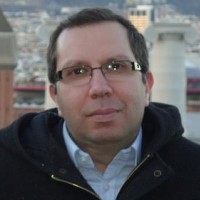 Prof. Nabil Aouf obtained his PhD from McGill University in 2002, specializing in the Electrical and Computer Engineering Department. He currently holds the prestigious position of Professor of Autonomous Systems and Machine Intelligence at City University of London.
Dr. Aouf is also the esteemed Director of the Autonomy of Systems Centre (ASC) and the Co-Director of the London Space Institute (LSI) at City University of London. He leads the Robotics, Autonomy and Machine Intelligence (RAMI) group and has established robust collaborations with leading industries and research organizations renowned for their expertise in autonomous systems and space research.
With a remarkable portfolio of over 220 rigorously peer-reviewed journal and conference publications, Prof. Nabil Aouf's scholarly influence is profound. In addition to his academic accolades, he serves as an Associate Editor for 4 esteemed journals, including holding a senior editorial position in the IEEE Transactions of Intelligent Vehicles.
Research Interests
Theory and application of Robotics and Autonomous Systems (Ground, Air and Space) Intelligence, and in particular:
- Perception (P) of Autonomous Vehicles through AI, Computer Vision, and Image processing (Machine Learning and Deep Learning)
- Guidance (G) (Path Planning), Navigation (N) (Localization), and Robust Control (C) Systems
- Decision-making through the planning and re-planning of Autonomous Systems Tasks
- eXplAInability (XAI) of Deep Learning based PGNC solutions for Autonomous Systems
- Real-time and embedded Machine Intelligence solutions.
- Adversarial Learning and Mitigation for AI-based Autonomous Systems
- Virtual/Augmented Reality based Human-Machine-Interaction
Link to Publications:
Biologically inspired aerostructures
- Lecturer: Professor Christoph Bruecker
- Date: Wednesday, 18 September 2024
Abstract
The topic of biomimetics is a growing area of interest in engineering sciences that requires interdisciplinary cooperation and training. We benefit from cooperation and mutual fertilization in the research team from biology and engineering.
Examples of research are presented on the silent flight of owls and the role of the leading and trailing edge of their wings, the reduction of drag by fish scales and their application in aerodynamics to reduce friction drag.
Finally, we learned from seals how to detect unsteady flow wakes and we could transfer this knowledge to aerofoils, where we apply similar sensory principles using artificial wind-hairs, which can feel the flow around the wing. This led to the new paradigm of "fly by feel", which can support autonomous air vehicle system in complex flow situations.
Biography
Prof. Dr.-Ing. habil Christoph Bruecker holds a doctoral degree (1993) and a Venia Legendi (2005) from the RWTH Aachen University (Rheinisch- Westfälische Technische Hochschule Aachen), Germany, where he mostly was engaged at the Aerodynamic Institute AIA. From 2005 on he was for 10 years full professor (W3) at the Technical University Bergakademie Freiberg as the Chair of Fluid Mechanics and Fluid Machinery, where he also served 3 years as the Director of the Institute of Mechanics and Fluid Dynamics.
In August 2015, he got awarded, in a competition of over 150 international researchers, the BAE SYSTEMS Sir Richard Olver Chair on Aeronautical Engineering at City, University of London. Established in 2014, this new prestigious chair honours Sir Richard’s contribution as Chairman of BAE SYSTEMS from 2004 to 2014.
In 2017, a further prestigious award was granted to Professor Christoph Bruecker as the Royal Academy of Engineering Research Chair in Nature-Inspired Sensing and Flow Control for Sustainable Transport at City, University of London.
Supported by the Royal Academy of Engineering and BAE SYSTEMS, Professor Bruecker's research aims to develop an aerodynamic ‘skin’ that can be evaluated for use on future aircraft. The award reflects the interdisciplinary work of his team including Biofluid Mechanics, Bio-Engineering, Micro-Fluidics, Aeroacoustics, natural flows, environmental flows and more.
The work of his team is also broadcasted in spectacular and breath-taking videography, e.g. a BBC2 programme featuring a peregrine falcon (the world’s fastest animal) in diving flight off the North Lake District cliffs and in the wind tunnel facilities in City’s Handley Page Aeronautical Engineering Laboratory.
The research earned Professor Bruecker a President’s Award for Outstanding Research Engagement: Media and Outreach at City in June 2018 and in 2024 the staff excellence award in recognition of Teaching and Learning. In addition, he got awarded an Adjunct Professor Title at the RWTH Aachen, Germany, for his engagement in cross-disciplinary research.
Neuro Symbolic AI
- Lecturer: Professor Artur Garcez
- Date: Wednesday, 16 October 2024
Abstract
AI has become the focus of large-scale research endeavours and has changed business practice. This led to an important debate about the impact of AI on education and society.
It has been argued that the building of a rich AI system, semantically sound, explainable and ultimately trustworthy, will require neurosymbolic AI with a sound reasoning layer in combination with deep learning.
Parallels have been drawn between Daniel Kahneman’s research on human reasoning and decision making and so-called AI systems 1 and 2. I will revisit early theoretical results of fundamental relevance to shaping the latest research in neurosymbolic AI, such as the proof that recurrent neural networks compute the semantics of logic programming.
I will also seek to identify bottlenecks and the most promising technical directions for the sound representation of learning and reasoning in neural networks. I will conclude by discussing the key ingredients for sustainable AI going forward - reliable, fairer and data efficient AI - identifying directions and challenges for the next decade of research in the field towards this goal.
About the speaker
Artur d’Avila Garcez is Professor of Computer Science at City St George's, University of London. He is a Fellow of the British Computer Society (FBCS), Fellow of the UK’s Higher Education Academy (FHEA), and president of the steering committee of the Neural-Symbolic Learning and Reasoning association (NeSy).
He has co-authored two books: Neural-Symbolic Cognitive Reasoning, Springer (2009) and Neural-Symbolic Learning Systems, Springer (2002), and co-founded the NeSy conference series, the longest standing conference series in neurosymbolic AI.
Garcez is a leading researcher in the field of neurosymbolic AI. He designed and implemented arguably the first neurosymbolic system for learning and reasoning. His research has led to more than 250 publications in major journals and conferences in Artificial Intelligence, Logic and Machine Learning, and in the flagship AI and Neural Computation conferences AAAI, NeurIPS, IJCAI, IJCNN, AAMAS and ECAI.
Garcez is a founding Editor-in-Chief of the Neurosymbolic AI journal, IOS Press, and holds editorial and senior program committee positions in all the major scientific journals and conferences in Artificial Intelligence and Machine Learning.
How does a society embrace technology?: Exploring modelling and tools for enquiry
- Lecturer: Nick Hine
- Date: Wednesday 15 January 2025
Change alters society. If that change is associated with the introduction of technology, it can be considered that technology has changed a society. Society tends not to manage either the introduction of new technology nor really understand how that introduction has influenced and changed the society. As a consequence, understand the changes and then managing the place of technology tends to be a retrospective enterprise, often triggered by evidence or a belief that the harm has been caused. With seismic change in society anticipated with the increasing adoption of technologies such as AI, those associated with mitigating climate change and addressing health epidemics such as obesity and diabetes, the ability to model and forecast the consequences of change are essential.
In any design and development (engineering) endeavour, stakeholders with different interests inevitably imagine roles and outcomes very differently. Understanding societal change involves stakeholders with widely diverse interests. Sociologists have a number of theoretical frameworks but few usable tools to model a society and changes within it, and even fewer that can enable them to explore these changes with stakeholders. Furthermore, modelling the attributes of a society and the attributes of influence and change are immensely difficult, not just because of the complexity of factors, but also the accounting for the meaning, value and weighting of influence that modulates change.
In this session we will explore this dilemma and explore an ongoing conversation between a sociologist and a computer scientist who are revisiting how bridging between stakeholders might be facilitated so that useful and usable computing tools can be devised that support the inquiry.
Blockchain and users
- Lecturer: Professor Andrea Baronchelli
- Date: Wednesday, 13 November
Bitcoin and Users: Collective dynamics of online marketplaces
Bitcoin and other cryptocurrencies have facilitated the emergence of new, largely unregulated ecosystems. Among these, dark markets serve as an intriguing case study for economists and scientists interested in the self-organization of socioeconomic systems. This talk will present recent findings that reveal the complex dynamics underlying these markets and their relationship with the legal online markeplaces.
Online marketplaces play a crucial role in legal and illegal e-commerce, yet their empirical properties are not well understood due to a lack of large-scale data. In this talk, I will discuss the systemic aspect of the interaction between multiple platforms and zoom in on the properties of buyer-seller networks within a single platform. First, I will focus on the resilience of the dark market ecosystem. I will analyze 24 instances of unexpected marketplace closure and show that coordinated user migration ensures overall resilience. Additionally, I will show that these marketplaces favor the emergence of decentralized trade networks, further enhancing systemic resilience. Second, I will consider buyer-seller networks by analyzing 245 million transactions on one e-commerce platform and 28 dark web markets. Despite the differences between the marketplaces, I will show remarkable regularities in user behavior and propose a simple model to replicate the main empirical observations. The findings provide insights into the formation mechanisms of buyer-seller networks, and highlight the central role of buyer memory and preferential attachment mechanisms. These results have implications for the understanding, design, and regulation of these platforms.
References
- ElBahrawy, Abeer, et al. "Collective dynamics of dark web marketplaces." Scientific reports 10.1 (2020): 1-8.
- Nadini, Matthieu, et al. "Emergence and structure of decentralised trade networks around dark web marketplaces." Scientific Reports 12.1 (2022): 1-9.
- Bracci, Alberto, et al. "Macroscopic properties of buyer–seller networks in online marketplaces." PNAS Nexus 1.4 (2022): pgac201.
About the speaker
Andrea Baronchelli is a Professor of Complexity Science at City, University of London. He also leads the Token Economy theme at The Alan Turing Institute. Additionally, Andrea us a Research Associate at the UCL Centre for Blockchain Technologies.
Andrea's research explores how people behave and organise themselves in decentralized socio-technical systems. To gain insights, he uses complex systems, network science, and machine learning to analyze large datasets, develops mathematical models, and conducts experiments with human subjects.
Andrea's work contributes to understanding how people coordinate in social networks, interact with and shape blockchain technology, and how information spreads and creates polarization. He has also extensively investigated, and continue to research, the evolution of social norms, how we categorize the world, and what triggers tipping points in collective behaviour. Furthermore, Andrea has explored human mobility and fundamental network science concepts like diffusion processes and the dynamics of time-varying networks.
His research has been published in leading journals such as Nature, Science, PNAS, Nature Human Behaviour, Nature Climate Change, Nature Communications, Science Advances, and Physical Review Letters. It has received support from various organisations, including UKRI, PayPal, ESRC, InnovateUK, and the UK Government. In 2019, Andrea received the Young Scientist Award for Socio and Econophysics from the German Physical Society.
Beyond academia, his research has had impact in both the public and private sectors - and generated an impact case for the Maths Department for the UK REF2021.
Recent grants as Principal Investigator include:
- Paypal gift: "Self-organized patterns of (de)centralization in the Bitcoin blockchain". January 2022 - January 2024. Funded amount: $340,000.
- UK Government grant: "IRIS: Global Health Security Academic Research Coalition". March 2021 - November 2023. Funded amount: £600,000.
- The Alan Turing Institute grant: "Investigating emerging central actors in the cryptocurrency ecosystem". PI. October 2020 - September 2023. Funded amount: £65,000.
- UKRI, COVID-19 Rapid Response Call: "COVID 19: Monitoring the effects of the pandemic on illicit online trade" (Grant no. ES/V00400X/1). May 2020 - November 2021. Funded amount: £272,813.
- Innovate UK Knowledge Transfer Partnership (KTP) Grant: "Data Science for Smart Bike Sharing". May 2019 - November 2021. Funded amount: £278,074.
In the video below Andrea discusses his research on the physics of socio-technical systems:
Shaping the world through research with Dr Andrea Baronchelli
Maths for Machine Learning
- Lecturer: Dr. Neil Saunders
- Date: Wednesday, 11 December
Abstract
The field of Machine Learning (ML) has enjoyed an unprecedented wave of enthusiasm in the last decade thanks to its applications in data science and Artificial Intelligence (AI). Yet while these advances are impressive, they are built quite fundamental mathematics which can often get lost to view in this burgeoning field.
This can present challenges to anyone (individual or corporation) who wishes to use ML & AI in their workflow, but doesn’t have the requisite mathematical skills required to understand how they achieve their goals and therefore, understand their limitations.
This talk will be a whistle-stop tour on some of the rudimentary mathematics behind ML, data science and AI, demonstrating some implementations in Python, and touching upon some of the ethical issues around its applications in industry and society.
Get in touch
For any question, please contact your university contact or email sst-webinar-series@city.ac.uk with your enquiry and a member of the team will be in touch.